Materials
Flannel bedding: when it is right and when it is far too much
21 August 2026 · 4 min read
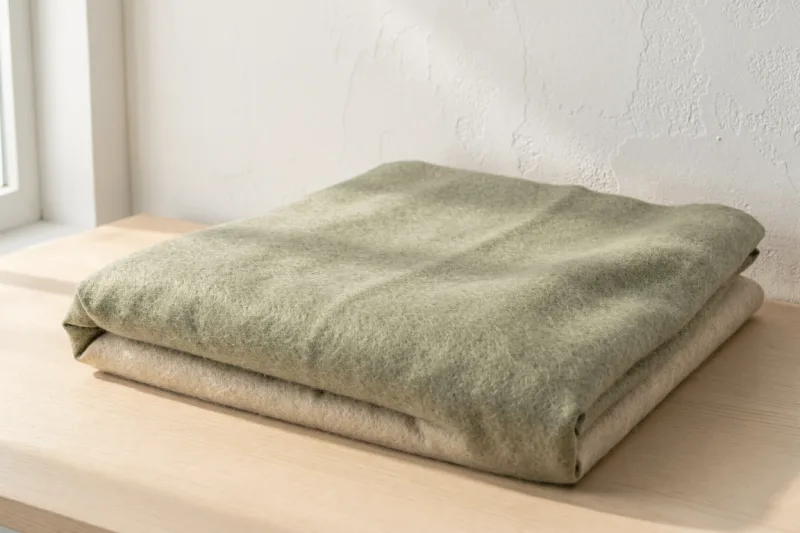
Brushed cotton is the warmest bedding most people will ever own. In a heated bedroom that is a problem, not a feature.
Flannel is ordinary cotton with a mechanically raised nap — the surface is brushed with fine wires until a halo of loose fibre ends stands up. Those fibres trap air against your skin, and that is where all the warmth comes from.
What it is good at
- Warmth on contact. No other bedding removes the cold-sheet shock the way flannel does. In an unheated bedroom this is worth a great deal.
- Softness immediately. Brushed cotton is soft on the first night without breaking in.
- Cost. It is cheap relative to how warm it is, because the warmth is in the finishing rather than in an expensive fibre.
What it is bad at
- Heated bedrooms. Above about 19 °C most people overheat under flannel regardless of the duvet.
- Sweating. The nap holds moisture close to the skin. If you sweat at night, flannel is the worst choice on the shelf.
- Pilling. The nap is loose fibre by definition, and loose fibre pills. Good flannel is 170 GSM or more from combed cotton; cheap flannel is a fuzzball by February.
- Summer storage. It is bulky, and you will be using it for four months a year.
How to judge quality before buying
Weight. Below 160 GSM it will pill quickly and thin out within two seasons. 170–190 GSM is the range worth paying for.
Brushed on both sides. Cheap flannel is brushed on one face only, which halves the warmth and shows as a visibly flatter reverse.
Combed cotton. Combing removes short fibres before spinning, and short fibres are precisely what pills.
Washing it so it stays good
40 °C, mild detergent, no softener — softener flattens the nap, which is the whole point of the fabric. Tumble dry low; high heat mats the nap permanently. Shake it hard before putting it on the bed to lift the fibres again.
Expect some lint in the first three washes. That is normal and it stops.
The alternative worth considering
If the bedroom is cold but you sweat, wool or linen sheets with a warmer duvet will beat flannel. Both move moisture away instead of holding it, and both work across a wider temperature range. Flannel is for cold and dry, not cold and damp.