Materials
What to sleep in when you run hot
29 May 2026 · 6 min read
Cooling bedding is mostly a marketing category. Four things genuinely change how hot a bed sleeps, and only one of them is the fabric.
Waking up too warm is the most common complaint we hear, and the most common fix people try — buying something labelled "cooling" — is the least reliable one.
Four things matter, roughly in this order.
1. The duvet, not the sheets
This is where most of the heat is. A 13.5 tog winter duvet in a heated bedroom will overheat you regardless of what it is covered in.
For a room at 18–20 °C, a 4.5 tog summer duvet or a 7.5 tog all-year one is enough for most people. If you share a bed with someone who runs cold, two single duvets on a double bed solves an argument that no fabric can.
2. Fibre, and specifically whether it breathes
The real division is natural against synthetic, not one natural fibre against another.
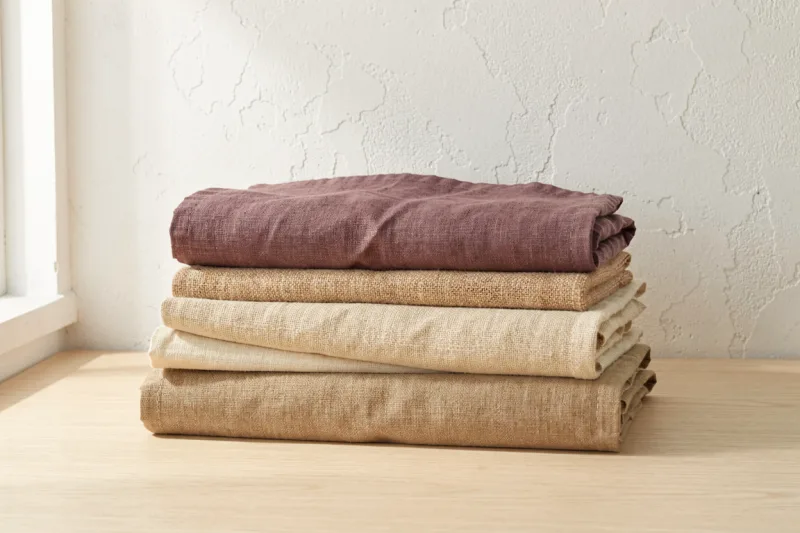
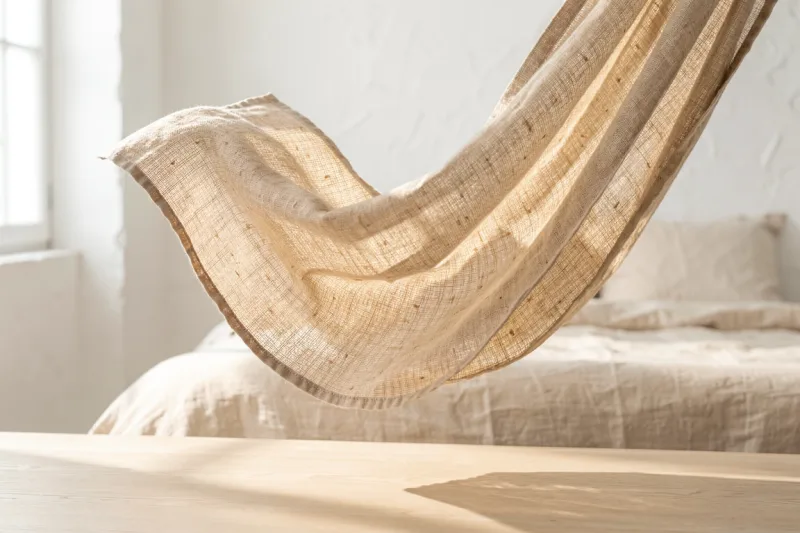
- Linen — the best of them. Hollow flax fibre moves moisture away fast, and the open weave moves air.
- Cotton percale — very close behind, and cheaper.
- Bamboo lyocell — genuinely cool to the touch and very good at wicking. Slightly less airy than linen but smoother.
- Cotton sateen — feels cool on contact but traps more heat over the night.
- Microfibre and polyester blends — avoid. They do not absorb moisture at all, so it sits on your skin.
Note that "cool to the touch" and "sleeps cool" are different properties. Sateen and silk win the first; linen and percale win the second, which is the one that matters at three in the morning.
3. Moisture, not temperature
What wakes you is usually damp, not heat. A fibre that absorbs sweat and releases it into the air keeps you dry; one that does not leaves you in a wet layer that then feels cold when you move.
This is the entire case for natural fibres and it is a bigger effect than any thread count.
4. The mattress and topper
Memory foam holds heat and returns it. If you sleep on solid memory foam, no sheet will fully fix the problem — a wool or cotton topper between you and the foam will do more than a new duvet cover.
What we would actually buy
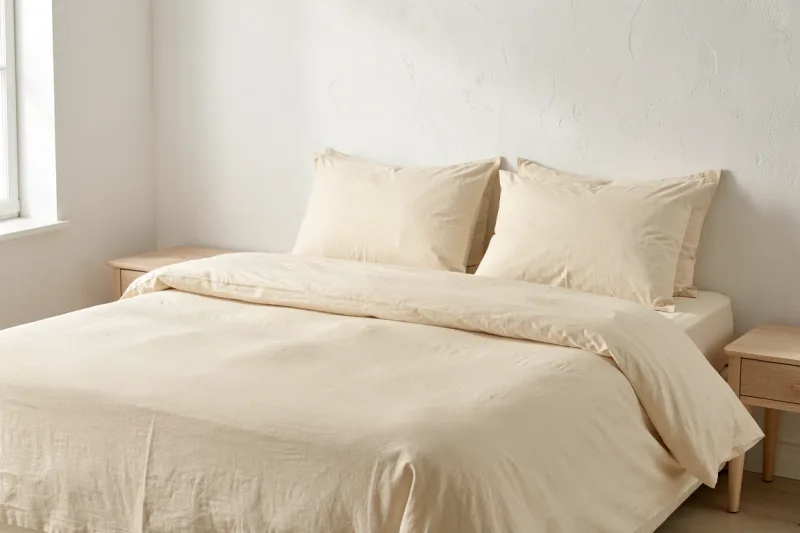
A 4.5 tog duvet, a linen or percale fitted sheet, and a bedroom you can get down to 18 °C. If one thing has to change, make it the duvet.
What to skip
"Cooling gel" pillow inserts lose their effect within twenty minutes of body contact. Sheets marketed as cooling that turn out to be polyester blends are worse than plain cotton. And a high thread count is warmer, not cooler — the denser the weave, the less air moves through it.