Materials
Silk pillowcases: what is proven, what is plausible, what is marketing
3 July 2026 · 5 min read
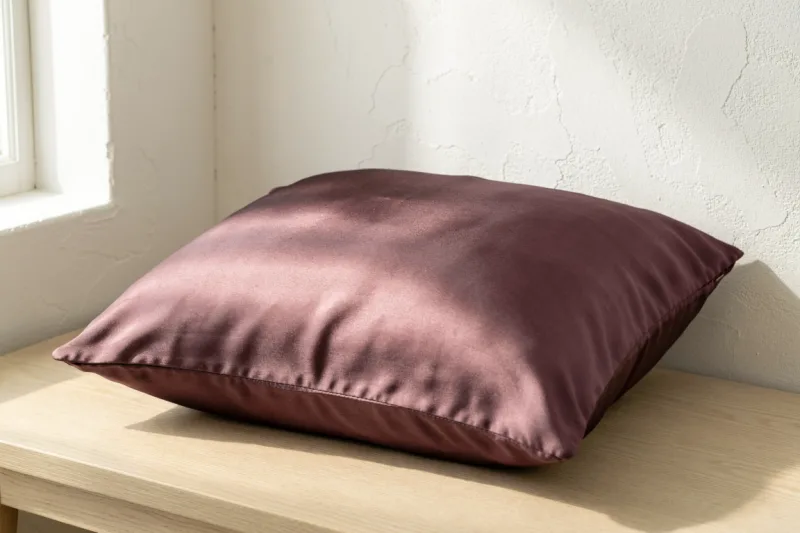
The friction claim holds up. The wrinkle claim is thin. Here is an honest sort of what a silk pillowcase can and cannot do, from a shop that sells them.
We sell silk pillowcases and we would rather you bought one for the right reason. So here is the sorting.
Well supported: less friction on hair
Silk has a far smoother surface than cotton, and measurably less friction against hair. Less friction means less mechanical damage overnight — fewer tangles, less breakage at the ends, and noticeably less frizz in the morning.
This effect is real, and it is strongest for curly, fine or chemically treated hair. If you wake up with a nest, this is the single change most likely to help.
Well supported: it does not draw moisture out of skin and hair
Cotton is absorbent — that is why we like it for sheets. Against your face for eight hours, that absorbency pulls moisture, and product, out of skin and hair. Silk absorbs far less.
If you use overnight face oils or leave-in hair treatment, a silk pillowcase keeps more of it where you put it. This one is straightforward physics.
Plausible but oversold: fewer sleep creases
Silk slides rather than grips, so the pillowcase does not fold your face into the same lines each night. Side and front sleepers do report fewer of those morning pillow marks.
Whether that translates into fewer permanent wrinkles over years is not established. The claim is repeated everywhere and the evidence is thin. Sun exposure and not smoking will do vastly more for your face than a pillowcase.
Plausible: better for acne-prone skin
Two mechanisms are proposed — less friction and less absorbed sebum sitting against the skin. Both are reasonable, and dermatologists often suggest it. The dominant factor is still washing the pillowcase often; a dirty silk pillowcase is worse than a clean cotton one.
Marketing: temperature and dust mites
Silk is described as temperature-regulating. It is cool to first touch and it does breathe, but so does linen, at a fifth of the price. It will not fix a hot bedroom.
"Hypoallergenic" is a marketing word with no legal definition. Silk is naturally less hospitable to dust mites than a thick cotton weave, which is a small real effect, not a medical one.
What to look for
- Momme weight — the density measure for silk. 19 momme is the sensible minimum; 22 is the good range; above 25 is heavy and rarely worth the extra.
- Mulberry silk, grade 6A — the longest, most uniform filament.
- Charmeuse weave — one side shiny, one side matte. Sleep on the shiny side.
- A hidden zip — buttons press into your cheek all night.
Care, because it decides whether it lasts
Cold water, pH-neutral detergent, mesh bag, delicate cycle or by hand. Never tumble dry. Never bleach. Dry flat, out of sun. Washed properly a 22 momme case lasts years; washed hot once, it is finished.