Care
Why white sheets go grey, and how to bring them back
5 June 2026 · 5 min read
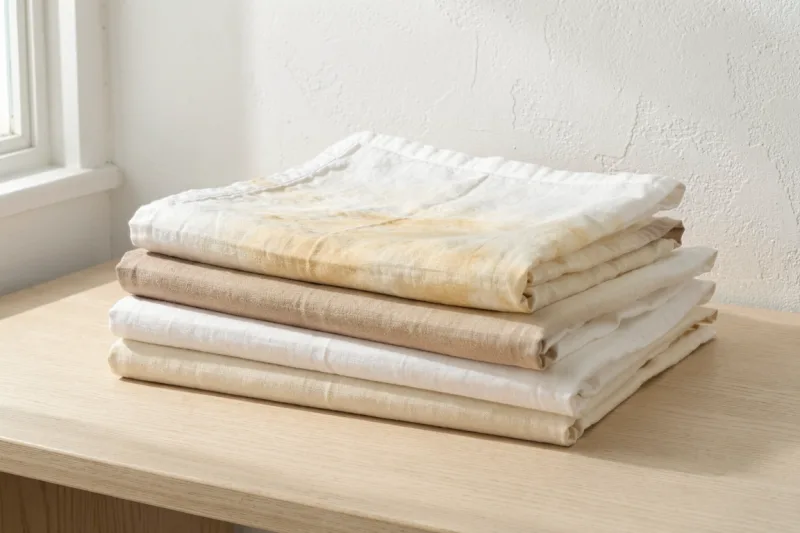
It is almost never dirt. It is body oil, detergent residue and hard water, in that order — and each one has a different fix.
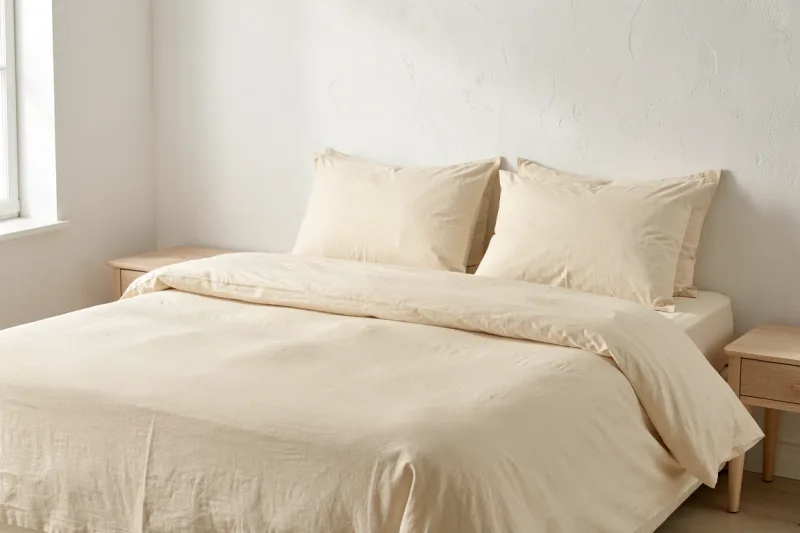
White bedding rarely goes grey because it is dirty. It goes grey because of three things that build up faster than a normal wash removes them.
Cause one: body oil
Sebum from skin and hair is oily, and oil does not dissolve in water at 30 °C. Washed cool, it stays in the fibre, oxidises over weeks and turns yellow-grey. This is the single most common cause, and it is why the greying starts on pillowcases and the top third of the sheet.
The fix: wash whites at 60 °C at least once a month. Not every wash — that shortens fibre life — but often enough to strip what 40 °C leaves behind.
Cause two: too much detergent
Counterintuitive, and very common. Excess detergent does not rinse out fully; it stays in the weave, goes slightly grey itself, and then attracts more soil on the next wear.
Most people use roughly twice what they need, because the cap is designed to be generous.
The fix: use half the recommended dose and add an extra rinse. If the sheets already feel slightly stiff or smell faintly of nothing at all when clean, this is your problem.
Cause three: hard water
Calcium and magnesium bind to fibre and to detergent, leaving a dull mineral film. Anyone in a hard-water region — much of Germany, southern England, most of Spain — is fighting this constantly.
The fix: 100 ml of white vinegar in the fabric-softener compartment. It is mildly acidic, dissolves the mineral film, rinses away completely and leaves no smell. Do this every third or fourth wash.
The recovery wash
For sheets that are already grey, in this order:
- Soak overnight in warm water with 100 g of oxygen bleach — sodium percarbonate, sold as an oxygen brightener. Not chlorine.
- Wash at 60 °C with half the usual detergent and no softener.
- Add 100 ml white vinegar to the rinse.
- Dry outside in sunlight if you can. Sun is a genuine bleach on white cotton and linen, and it is free.
Two rounds of this recovers most bedding that is not permanently stained.
What not to do
Chlorine bleach. It whitens once and then yellows cotton over time by weakening the fibre, and it damages linen badly. On any cloth with elastane — most fitted sheets have some in the hem — it destroys the elastic.
Fabric softener. The waxy film it leaves is itself a greying agent, and it blocks absorbency so the next wash cleans less well.
Prevention, which is easier
- Take off makeup and heavy face oil before bed.
- Wash pillowcases twice a week; they take the worst of it.
- Half-dose detergent, always.
- 60 °C once a month, vinegar every third wash.
- Do not store clean whites in plastic — it traps humidity and yellows cotton.